
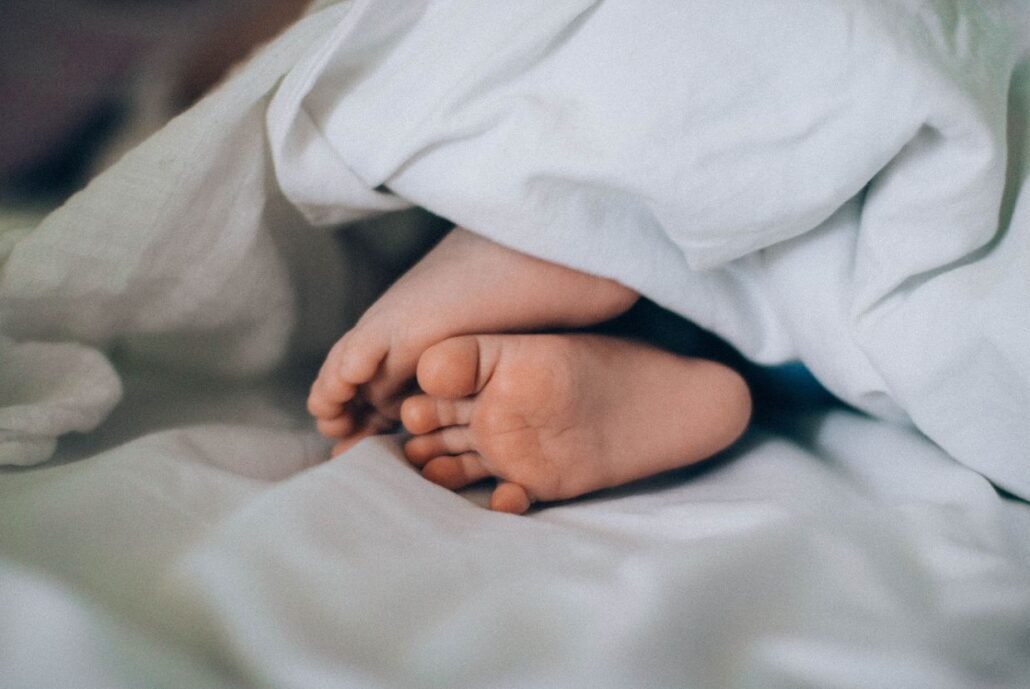
Good sleep is especially important during the first years of life. Between 12 and 24 months, children go through a stage full of changes: they start walking, expand their vocabulary, become more independent and constantly discover new things. All of this development requires plenty of rest.
As a general guideline, a child at this age usually needs between 11 and 14 hours of sleep a day, including naps. However, this does not mean that every child will sleep for exactly the same amount of time or that they should sleep through the entire night.
In fact, waking up occasionally, calling for their parents or going through a period when bedtime becomes more difficult can all be part of normal development. It becomes more of a concern when these difficulties persist, are particularly intense or begin to affect the child’s well-being during the day.
That is why, when talking about sleep disorders in children aged 1 to 2, it is important to distinguish between a difficult phase and a problem that should be discussed with a paediatrician.
The Most Common Sleep Disorders in Children Aged 1 to 2
Not all sleep-related problems are the same. Some are mainly behavioural, while others may be linked to breathing, certain medical conditions or the natural maturation of the nervous system.
In addition, sleep disorders in children aged 1 to 2 do not always appear in the same way. Some children struggle to fall asleep, while others fall asleep easily but wake several times during the night.
Childhood insomnia
This is one of the most common sleep difficulties during early childhood. A child may take a long time to fall asleep, protest every night when bedtime arrives or wake repeatedly and need help getting back to sleep.
It is often related to what are known as sleep associations. For example, a child who always falls asleep in someone’s arms may look for the same conditions when they briefly wake during the night.
Separation anxiety also plays a role and is very common at this age. Children become increasingly aware that their parents can leave, which can make bedtime particularly difficult. Among sleep disorders in children aged 1 to 2, difficulty falling or staying asleep is one of the issues that most often concerns families.
Obstructive sleep apnoea
This is something that deserves a little more attention.
A child may occasionally snore because they have a cold or a blocked nose. However, regular snoring, particularly when accompanied by pauses in breathing, laboured breathing, sweating or very restless sleep, should be discussed with a doctor.
Obstructive sleep apnoea causes the upper airways to partially or completely close while a child is asleep. In childhood, it may be associated with several factors, including enlarged tonsils or adenoids.
This does not mean that every child who snores has sleep apnoea. However, if snoring is frequent or parents notice that their child seems to stop breathing for a few seconds, it is worth seeking a paediatric assessment.
Parasomnias: nightmares, night terrors and other episodes
Parasomnias are behaviours or experiences that occur during sleep. They include nightmares, night terrors, confusional arousals and sleepwalking.
Although some can occur in young children, many become more common from around the age of three.
A night terror, for example, can be quite alarming for parents. A child may cry, scream or appear extremely frightened without actually being fully awake. The following day, they will usually have no memory of what happened.
Nightmares are different. In this case, the child does wake up and may look for comfort from their parents. As their imagination develops, new fears may also emerge, including fear of the dark, unfamiliar noises or being left alone.
Movements during sleep
Rocking the body or head before falling asleep may look unusual, but certain rhythmic movements are relatively common during the early years.
They generally become less frequent as the child grows. Even so, if the movements are very intense, cause injuries, repeatedly occur throughout the night or are accompanied by other symptoms, it is worth mentioning them to a paediatrician.
Restless legs syndrome and other movement disorders can also interfere with sleep, although they are more difficult to identify at an age when children cannot yet clearly describe what they are feeling.
Why Do Sleep Disorders in Children Aged 1 to 2 Occur?
There is not always one single cause behind sleep disorders in children aged 1 to 2. In fact, several factors often overlap.
Changes in routine are one example. Starting nursery, travelling, moving into a different bedroom or spending a few days away from home can temporarily disrupt sleep.
Developmental changes should also be taken into account. Learning to walk, beginning to talk and becoming more independent are major milestones. During these stages, some families notice more frequent night waking or greater resistance at bedtime. These periods are popularly known as “sleep regressions”, although the term itself is not a medical diagnosis.
There may also be much simpler explanations. A cold, teething, an ear infection, digestive discomfort or anything else causing pain or discomfort can result in several difficult nights for a child who normally sleeps well.
For this reason, when sleep disorders in children aged 1 to 2 appear, it helps to consider what else is happening in the child’s life. If the change coincides with an illness, a trip or a new developmental stage and disappears soon afterwards, it is likely to be temporary.
When Should Sleep Disorders in Children Aged 1 to 2 Be a Concern?
Rather than focusing on one difficult night, it is more useful to look at how the child usually sleeps and how they behave during the day.
It is worth making an appointment with a paediatrician if sleep problems persist and are clearly affecting family life or the child’s well-being. Significant behavioural changes, excessive irritability, daytime tiredness or concerns about growth should also be discussed with a healthcare professional.
Not all sleep disorders in children aged 1 to 2 should therefore be interpreted as a sign of illness. Their frequency, duration and, above all, the presence of other symptoms help determine when medical advice is needed.
Certain warning signs deserve particular attention:
- loud and frequent snoring;
- visible pauses in breathing;
- difficulty or increased effort when breathing during sleep;
- bluish or unusually pale skin;
- unusual movements that could suggest a seizure;
- repeated waking associated with pain;
- excessive daytime sleepiness;
- loss of previously acquired skills or significant changes in behaviour.
If a child is struggling significantly to breathe, changes colour, does not respond normally or there is any other situation that appears to be an emergency, immediate medical attention should be sought.
What Can We Do to Help Them Sleep Better?
When there are no warning signs, many sleep disorders in children aged 1 to 2 improve by focusing on something that may seem surprisingly simple: routine.
At this age, knowing what comes next can provide children with a sense of security. There is no need to create an elaborate bedtime ritual. A simple sequence such as bath, pyjamas, dimmer lights, a story and bed may be enough.
The important thing is consistency.
It can also help to keep relatively stable times for waking up, napping and going to bed. These do not need to be followed to the exact minute, but large differences from one day to another can make it harder for the body to establish a regular rhythm.
Screens are not ideal companions just before bedtime either. Television, mobile phones and tablets provide stimulation at precisely the time when children need to wind down. Quieter activities are a better choice for the final part of the day.
Reading together is one of the simplest options.
A short story can help slow things down, provide a few minutes of undivided attention and create a very clear signal: once the story is over, it is time to sleep. If you are looking for age-appropriate reading, explore our selection of books for 2-year-olds, with stories that can easily become part of a calming bedtime routine.
What Should We Do When They Wake During the Night?
Brief awakenings are a normal part of sleep. Adults experience them too, although most of the time we do not even remember them.
When a young child wakes and calls for their parents, it is best to respond calmly and consistently with whatever approach the family has chosen. Keeping the lights low, speaking quietly and avoiding turning the wake-up into playtime can help reinforce the idea that it is still time to sleep.
There is no single correct way to handle night waking. Some families prefer to stay beside their child, while others gradually work towards helping them fall back asleep with less assistance.
The important thing is to keep expectations realistic. Children do not all learn to sleep completely independently at exactly the same age. This is one reason why some sleep disorders in children aged 1 to 2 may improve naturally as children mature and develop new ways of settling themselves.
We also recommend reading: 20-Month Sleep Regression: Why It Happens and How to Handle It.
Do They Need Medical Treatment?
For most sleep disorders in children aged 1 to 2, the first step is to review sleep schedules, bedtime routines, sleep associations and any other factors that may be interfering with rest.
If the paediatrician suspects an underlying medical cause, the approach will be different. Frequent snoring combined with pauses in breathing, for example, may require an assessment for obstructive sleep apnoea and possibly a referral to a specialist sleep service.
The same applies when there are symptoms associated with reflux, allergies, breathing problems, recurring pain or other medical conditions.
Sleep medication should not become a home remedy. Melatonin, for example, may be used in certain paediatric situations, but whether it is appropriate, as well as the dose and duration, should be determined by a healthcare professional. Antihistamines should not be given simply to make a child sleepy unless there is a specific medical indication.
Ultimately, sleep disorders in children aged 1 to 2 do not always mean that something is wrong. In many cases, they are part of a particular developmental phase and improve once a stable routine returns or the child moves through that stage.
One difficult week does not necessarily mean there is a sleep disorder. However, if something about a child’s sleep is worrying the family, continues for several weeks or is accompanied by physical symptoms, discussing it with their paediatrician is always a sensible choice.
This article is for informational purposes only and does not replace medical assessment or advice from a healthcare professional.
Sources
- Spanish Association of Primary Care Paediatrics (AEPap). Alteraciones y trastornos del sueño en la infancia y adolescencia. Curso de Actualización Pediatría 2022.
- Spanish Association of Paediatrics (AEP). Protocolos: Trastornos del sueño en niños. Protocolos actualizados en 2022.
- Grupo de Trabajo de la Guía de Práctica Clínica sobre Trastornos del Sueño en la Infancia y Adolescencia en Atención Primaria. Guía de Práctica Clínica sobre Trastornos del Sueño en la Infancia y Adolescencia en Atención Primaria. Plan de Calidad para el Sistema Nacional de Salud.
- Ugarte Líbano R. Insomnio infantil. Asociación Española de Pediatría de Atención Primaria (AEPap).
- FAPap. El sueño infantil en la consulta. Formación Activa en Pediatría de Atención Primaria.
- FAPap. Parasomnias en la edad pediátrica. Formación Activa en Pediatría de Atención Primaria.
- Merck Manual, Professional Edition. Sleep Problems in Children.
- Merck Manual, Professional Edition. Obstructive Sleep Apnea in Children.
- World Health Organization (WHO). Guidelines on Physical Activity, Sedentary Behaviour and Sleep for Children Under 5 Years of Age.