
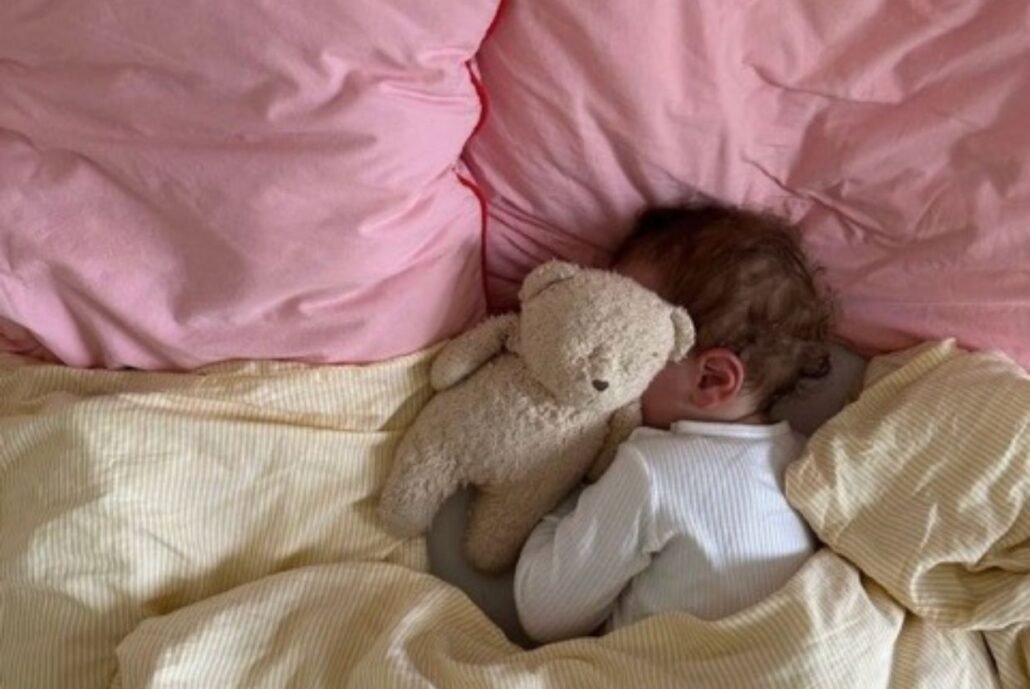
Just when it seemed like bedtime was finally becoming easier, everything changes again. Your toddler starts waking up several times a night, resists going to bed, or suddenly needs much more reassurance to fall asleep.
If this sounds familiar, you’re far from alone.
The 20-month sleep regression is one of those phases that can catch parents by surprise. After weeks or even months of relatively good sleep, some toddlers suddenly begin having more disrupted nights. While it can feel frustrating and exhausting, it is usually linked to normal developmental changes rather than a serious sleep problem.
Understanding what is happening can help you approach this stage with more confidence and avoid making rushed changes that may create new sleep challenges later on.
What Is the 20-Month Sleep Regression?
The 20-month sleep regression is not a medical condition or diagnosis. It is a temporary period during which a toddler’s sleep patterns become less predictable.
Some children begin waking more frequently during the night. Others suddenly resist bedtime, need more parental presence to fall asleep, or seem unable to settle as easily as before.
Every child experiences this stage differently. Some show only mild changes for a few days, while others seem to turn the whole family’s sleep routine upside down for several weeks.
The good news is that, in most cases, it is temporary.
Why Does the 20-Month Sleep Regression Happen?
There is rarely one single explanation for a sleep regression at this age. More often, several developmental factors come together at the same time.
A Rapidly Developing Brain
Around 20 months, toddlers are learning at an incredible pace.
They are acquiring new words almost every day, understanding more about the world around them, improving their memory, and becoming increasingly aware of their surroundings.
All of this learning requires a huge amount of mental processing.
Many parents notice that their child seems unwilling to “switch off” at bedtime. After a day full of discoveries and new experiences, their brain may simply need more time to settle.
Separation Anxiety Can Return
Even though toddlers now understand that their parents continue to exist when they are out of sight, they still do not always feel comfortable with that separation.
As a result, many children seek more physical closeness at bedtime, call for their parents more often during the night, or become upset when left alone to sleep.
For many families, the 20-month sleep regression coincides with a renewed phase of separation anxiety.
This is not manipulation or bad behaviour. It is a normal part of emotional development.
A Growing Desire for Independence
At this age, many toddlers discover the power of saying “no.”
They want to make their own choices, test boundaries, and feel more in control of their environment.
Bedtime often becomes one of the places where this new independence shows up.
Refusing pyjamas, asking for one more story, getting out of bed repeatedly, or protesting when the lights go out are all common behaviours during this stage.
Although challenging, they are also signs of healthy development.
Changes in Naps
Between 18 and 24 months, many toddlers settle into one daily nap.
Sometimes that nap becomes too long. Other times it becomes too short. Both situations can affect nighttime sleep.
Finding the right balance is not always easy, and temporary adjustments to sleep schedules are often needed during this period.
Common Signs of the 20-Month Sleep Regression
While every child is different, some signs tend to appear more frequently than others:
- More frequent night wakings.
- Resistance at bedtime.
- Crying when parents leave the room.
- Increased need for physical comfort.
- Shorter or more irregular naps.
- Greater irritability during the day.
- Sudden changes in previously established sleep habits.
Seeing these behaviours can feel discouraging, especially if sleep had been improving before. However, they do not mean that all previous progress has been lost.
How to Handle the 20-Month Sleep Regression
There is no single solution that works for every child.
However, sleep specialists and paediatricians generally agree on a few strategies that can help families navigate this phase more smoothly.
Keep Bedtime Routines Consistent
Predictability helps children feel safe.
Your bedtime routine does not need to be complicated. What matters most is that it follows a similar pattern each evening.
For example:
- Dinner.
- Bath time.
- Pyjamas.
- Brushing teeth.
- Story time.
- Lights out.
Repeating the same sequence each night helps your toddler recognise that bedtime is approaching.
Create a Calm Sleep Environment
The sleep environment matters more than many parents realise.
A quiet bedroom, soft lighting, a comfortable temperature, and minimal stimulation can all support better sleep.
Reducing screen time and highly active play before bed can also make it easier for children to wind down.
Stay Calm and Consistent
Sleep regressions can be exhausting.
After several difficult nights, it is completely understandable to change strategies from one evening to the next.
One night you may stay beside your child. The next night you may try leaving sooner. A few nights later, you may end up sleeping in their room because everyone is exhausted.
While this is understandable, consistency often matters more than the specific approach you choose.
Responding in a similar way each night tends to provide more security and reassurance.
Story Time Can Be a Valuable Part of the Solution
Reading before bed is often recommended by paediatricians and child development specialists.
Beyond supporting language development, bedtime stories help create a calm transition between the activity of the day and the restfulness of sleep.
During the 20-month sleep regression, many toddlers crave comfort, connection, and predictability.
Sharing a story together can provide exactly that.
Books that focus on emotions, reassurance, and gentle companionship, such as Luna, can become a comforting part of the bedtime routine. While a story will not magically eliminate night wakings, it can help children associate bedtime with a positive and peaceful experience.
Many toddlers also find comfort in repetition. Reading the same story night after night often provides a reassuring sense of familiarity during periods of change.

Discover: Luna
An ideal story to accompany your bedtime routine. A gentle and poetic tale that helps create a special moment between parents and children at the end of the day.
What Should You Do When Your Toddler Wakes Up Repeatedly?
Night wakings are often the most difficult part of the 20-month sleep regression.
Keep Things Quiet and Boring
When your child wakes up, try to keep interactions calm and low-key.
Bright lights, games, or lengthy conversations can make it harder for them to return to sleep.
The goal is to provide reassurance without turning the wake-up into an exciting event.
Give Them a Little Time
Not every wake-up requires an immediate response.
Sometimes toddlers are able to settle themselves back to sleep if given a few moments.
Learning to reconnect sleep cycles is a skill that develops gradually over time.
What Usually Doesn’t Help
When families are exhausted, quick fixes can be tempting.
However, some common reactions may actually make the situation more difficult:
- Constantly changing bedtime routines.
- Pushing bedtime much later.
- Removing naps unnecessarily.
- Introducing new sleep habits that may be difficult to reverse later.
- Responding very differently from one night to the next.
Patience is not always easy when everyone is tired, but it is often one of the most effective tools during this phase.
When Should You Speak to a Paediatrician?
Most cases of the 20-month sleep regression improve naturally over time.
However, it is worth seeking professional advice if you notice:
- Loud snoring.
- Pauses in breathing during sleep.
- Excessive daytime sleepiness.
- Significant feeding difficulties.
- Persistent pain or discomfort.
- Developmental concerns.
- Sleep problems that continue for months without improvement.
In these situations, it is important to rule out any underlying medical causes.
How Long Does the 20-Month Sleep Regression Last?
This is usually the question parents want answered most.
Unfortunately, there is no exact timeline.
Some toddlers return to their usual sleep patterns within a few days, while others need several weeks to adjust.
In general, developmental sleep regressions tend to last anywhere from two to six weeks.
Although it may feel endless while you are in the middle of it, most children gradually return to more settled sleep as they gain confidence and adapt to their new developmental skills.
A Challenging but Temporary Stage
If your family is currently going through the 20-month sleep regression, it may feel as though all progress has disappeared overnight.
That feeling is completely understandable.
When everyone is tired, it can be difficult to see beyond the next sleepless night. However, most sleep regressions end the same way they begin: gradually and often without parents even noticing when things start improving.
With patience, consistency, and realistic expectations, most toddlers eventually return to a more stable sleep pattern.
And although it may not feel like it right now, restful nights will come back.
Sources
HealthyChildren.org (American Academy of Pediatrics) – Toddler Bedtime Trouble: 7 Tips for Parents
NHS (National Health Service) – Helping your baby to sleep
Sleep Foundation – 18-Month Sleep Regression
Riley Children’s Health – Does Sleep Training Your Baby Cause Long-Term Harm?