
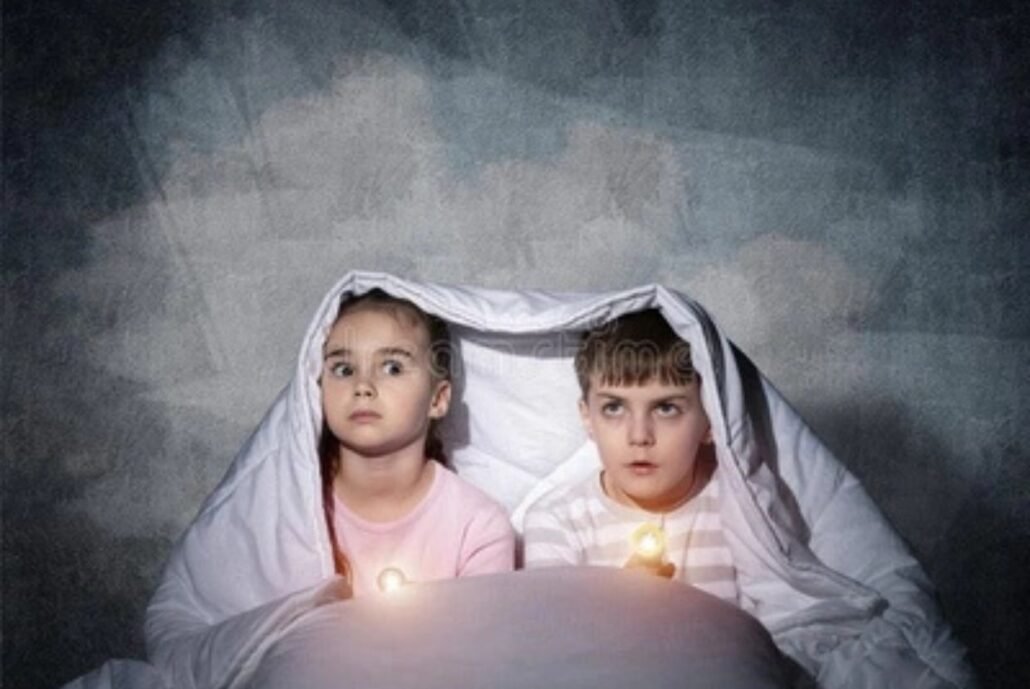
Night-time arrives. After bath time, pyjamas and a bedtime story, everything seems ready for sleep. You give your child a goodnight kiss, turn off the light and, just as you’re about to leave the room, you hear:
“Can you leave the door a little bit open?”
Or perhaps:
“I think there’s a monster under my bed.”
To an adult, it’s obvious there’s nothing to be afraid of. But for a child, that fear feels completely real. They’re not exaggerating, trying to get attention or looking for an excuse to stay awake. At that moment, their imagination makes what they fear seem absolutely real.
That’s why one of the questions parents ask most often is how to help children overcome fear of the dark without forcing them to face it, dismissing their feelings or turning bedtime into a nightly struggle.
The good news is that fear of the dark is a normal part of childhood development. For most children, it gradually fades as they grow in confidence and maturity. What really makes a difference isn’t finding an instant solution, but how we support them while they learn to feel safe.
Why Are Children Afraid of the Dark?
Before trying to help children overcome fear of the dark, it’s worth understanding where that fear comes from.
As children grow, their imagination develops at an incredible pace. Every day they invent stories, remember things that caught their attention and imagine situations they’ve never experienced before.
This wonderful creativity has many benefits, but it also brings new fears.
Darkness itself isn’t frightening. What happens is that, when children can’t clearly see what’s around them, their imagination fills in the gaps. A shadow on the wall can suddenly look like a person. A pile of clothes on a chair can become a monster. Even an ordinary noise in the house can sound mysterious or unsettling.
Tiredness also plays an important role. By the end of the day, children are more emotionally vulnerable, and worries that seemed insignificant during the afternoon can suddenly feel much bigger at bedtime.
In many cases, children aren’t really afraid of the dark itself. They’re afraid of what they imagine might be hiding in it.
Some of the most common fears include:
- Monsters.
- Shadows that look like people.
- Strange noises.
- Burglars.
- Nightmares or scary dreams.
Every child experiences this stage differently. Some will tell you exactly what’s worrying them, while others simply say they don’t want the light turned off or would rather not sleep alone.
Listening without judging is the first step towards helping them.
How to Help Children Overcome Fear of the Dark Without Dismissing Their Feelings
When your child is scared, it’s completely natural to want to reassure them as quickly as possible.
Our first instinct is often to say things like:
“There’s nothing to worry about.”
“There’s nothing there.”
“Don’t be scared.”
We say these things because we want to comfort them.
The problem is that when a child feels frightened, their brain isn’t looking for a logical explanation. What they’re really looking for is reassurance and safety.
That’s why simply telling them “There’s nothing there” rarely makes the fear disappear.
Start by Validating Their Feelings
One of the most effective ways to help children overcome fear of the dark isn’t by convincing them they’re wrong, but by helping them feel understood.
Validating a child’s feelings doesn’t mean agreeing that there’s really a monster under the bed.
It simply means recognising that the emotion they’re experiencing is genuine.
You could say things like:
“I understand that you’re feeling scared.”
“Sometimes everything feels different when it’s dark.”
“I’m here with you.”
On the other hand, comments such as:
- “Don’t be silly.”
- “You’re too old to be scared.”
- “Big kids aren’t afraid.”
often have the opposite effect.
Your child doesn’t stop feeling frightened. They simply learn that they shouldn’t talk about it.
When children feel safe sharing their fears without being judged, it becomes much easier to support them as they gradually build confidence.
Help Them Put Their Feelings Into Words
Some evenings you’ll ask:
“What’s wrong?”
And they’ll simply answer:
“I don’t know.”
That’s perfectly normal.
Many young children don’t yet have the vocabulary to explain exactly what they’re feeling.
Instead of expecting an immediate answer, try asking gentle, open questions that encourage them to talk.
For example:
- “Is there something in particular that’s worrying you?”
- “What do you think might be there when the lights go out?”
- “What makes you feel unsafe?”
The goal isn’t to encourage their imagination or reinforce their fears.
It’s to understand what’s behind those feelings.
After all, there’s a big difference between a child who’s frightened after having a nightmare and one who’s been unsettled by something they saw during the day.
The better we understand what’s causing the fear, the easier it becomes to offer the support they really need.
Don’t Expect Them to Overcome It Overnight
If you’re looking for ways to help children overcome fear of the dark, this may be the most important piece of advice.
There’s no need to force them.
It’s easy to fall into saying things like:
- “Turn the light off, you’re a big kid now.”
- “I’m not coming back into your room.”
- “You have to learn to sleep on your own.”
Even when they’re said with good intentions, these phrases often increase anxiety rather than reduce it.
Think for a moment about something that genuinely scares you.
Would it help if someone forced you to face it before you felt ready?
Probably not.
Children are no different.
Sleep specialists generally recommend a gradual and supportive approach. Stay close while your child slowly builds confidence.
For the first few nights, you might sit beside the bed for a few minutes. Later, you could stay near the bedroom door. Eventually, a reassuring goodnight and a reminder that you’re close by may be all they need.
The goal isn’t for your child to stop being afraid tomorrow.
The goal is to help them discover, little by little, that they can feel safe even when that fear appears.
A Bedtime Routine Can Make All the Difference
When a child is afraid of the dark, it’s easy to think the problem begins the moment the lights go out. In reality, what happens during the hour before bedtime can have a big impact too.
Children feel safer when they know what to expect. A predictable routine helps them relax and makes bedtime feel calmer and more reassuring.
The good news is that you don’t need a complicated routine. In fact, the simplest ones are often the most effective.
A bedtime routine might include:
- A warm bath.
- Putting on pyjamas.
- Brushing their teeth.
- Reading a bedtime story.
- A cuddle, a goodnight kiss… and lights out.
What matters most isn’t how long the routine lasts, but that it stays fairly consistent every evening. Over time, your child’s brain begins to associate these familiar steps with winding down and getting ready for sleep.
It’s also a good idea to avoid screens during the last hour before bedtime. The light they emit and the stimulating content they provide can make it harder for children to relax and can keep their imagination racing when it’s time to sleep.
Should You Leave a Night Light On?
This is one of the questions parents ask most often.
Is it better for children to sleep in complete darkness, or should you leave a small light on?
There isn’t a single right answer.
If a soft night light helps your child feel calmer, it can be a helpful stepping stone while they gradually build confidence. The key is choosing a warm, dim light that provides reassurance without brightly lighting the whole room.
The same applies to leaving the bedroom door slightly open. For some children, hearing their parents nearby or seeing a small strip of light from the hallway is enough to help them relax.
As their confidence grows, these supports usually become unnecessary without needing to be removed suddenly.
What If They Say There’s a Monster?
This is one of the most common bedtime situations.
Your child stares at the corner of the room, points under the bed or insists there’s a monster hiding in the wardrobe.
Your instinct may be to search the whole room to prove there’s nothing there.
However, repeating this every night can unintentionally reinforce the idea that there really was something worth checking.
It also rarely helps to simply say:
“There are no monsters.”
For a young child, what they’re imagining can feel just as real as anything they see during the day.
A more helpful response might be:
“I understand why that feels scary. Sometimes our imagination makes things seem very real. The important thing is that you’re safe here, and I’m with you.”
This validates your child’s feelings without confirming that the danger is real.
Over time, they’ll gradually become better at separating imagination from reality.
Comfort Objects Can Help Too
Many children sleep with a favourite teddy, blanket or comfort toy.
Far from being a bad habit, these comfort objects often provide reassurance when parents are no longer in the room.
To a child, they represent something familiar and comforting that helps them feel secure at bedtime.
There’s no need to take them away too quickly or insist they’re “too old” to sleep with them.
Most children naturally stop relying on them when they feel ready.
Bedtime Stories Can Help When Fear of the Dark Appears
No story can make a child’s fear disappear overnight.
But stories can help children understand what they’re feeling.
Many children find it easier to relate to a character experiencing similar emotions than to explain their own fears directly. Through stories, they discover that being scared is completely normal, that they’re not alone, and that fear can gradually become easier to manage.
Reading together before bed also transforms bedtime into a calm moment of connection. Sharing a story helps children slow down after a busy day, strengthens the bond between parent and child, and turns bedtime into a safe, predictable routine.
At Nöpp Editions, we believe in the power of stories to support families through every stage of childhood. That’s why we created the Sweet Dreams Pack—a carefully selected collection of bedtime stories designed to make evenings calmer and more meaningful.
Among them is Luna, a gentle story that encourages children to see the night from a different perspective, approaching darkness with warmth, imagination and tenderness. It doesn’t promise to make fear disappear overnight. Instead, it opens the door to conversations about emotions and helps children feel supported as they learn to face them.
Because sometimes, what children need most isn’t to stop being afraid straight away.
They simply need to discover that they can still feel safe, even when fear shows up.

Discover: Sweet Dreams Pack
Turn bedtime into a peaceful moment with the Sweet Dreams Pack. It includes the book Luna and a beautiful fabric star decoration as a gift, helping little ones feel comforted before bedtime.
Common Mistakes Parents Make Without Realising
When trying to help children overcome fear of the dark, it’s natural to look for a quick solution. However, some well-intentioned approaches can actually make this stage last longer than necessary.
Dismissing Their Feelings
Comments like:
- “Don’t be silly.”
- “There’s nothing to worry about.”
- “You’re too old to be scared.”
may stop a child from talking about their fear, but they won’t stop feeling it.
Listening, validating their emotions and offering reassurance is far more helpful than trying to convince them that they shouldn’t be afraid.
Forcing Them to Face the Dark
Forcing children to confront their fear rarely builds confidence.
Children feel braver when they know a trusted adult is there to support them, not when they’re expected to face something frightening on their own.
Changing the Routine Every Night
One evening you leave the light on. The next, you stay in the room until they’re asleep. The following night, you decide not to go back in at all.
These constant changes can make bedtime even more confusing and unsettling.
Keeping a consistent bedtime routine and responding in a similar way each night helps children know what to expect and feel more secure.
Exposing Them to Scary Content Before Bed
Films, videos, television programmes or even conversations between adults can leave children with vivid images that resurface as soon as the lights go out.
During the last hour before bedtime, it’s usually best to choose calm activities, quiet play and gentle stories that help children unwind.
When Should You Seek Professional Advice?
In most cases, fear of the dark is a normal part of childhood development and gradually fades as children become more confident and emotionally mature.
However, there are situations where it’s worth speaking to your paediatrician or a child psychologist.
You should consider seeking professional advice if:
- The fear continues for many months without improving.
- Your child consistently refuses to sleep in their own bedroom.
- The whole family’s sleep is being affected over a long period.
- Your child experiences intense anxiety or physical symptoms related to bedtime.
- The fear began after a particularly upsetting or traumatic experience.
- They start avoiding everyday activities because of their fear of darkness.
Asking for professional support doesn’t necessarily mean something is wrong. Sometimes a few personalised strategies are all that’s needed to help your child move forward.
Frequently Asked Questions
At What Age Does Fear of the Dark Usually Begin?
Fear of the dark most commonly appears between the ages of 2 and 8, when children’s imagination develops rapidly and they become more aware of the world around them.
Not every child experiences it, but it’s a very common stage of childhood.
Is It Okay to Leave a Night Light On?
Yes. A dim, warm night light can provide reassurance while your child gradually gains confidence sleeping in a darker room.
The goal isn’t to rely on it forever, but to use it as temporary support if it helps your child feel safe.
Should I Make My Child Sleep Alone?
No.
If you’re trying to help children overcome fear of the dark, forcing them to face their fear is rarely the most effective approach.
Current evidence suggests that a gradual, supportive approach works much better, allowing children to build confidence at their own pace while knowing a trusted adult is nearby.
How Long Does This Stage Usually Last?
There’s no fixed timeline.
For some children, the fear fades within a few weeks. For others, it may take several months.
The important thing is to look for gradual progress. Little by little, most children become more confident and begin to feel safer at bedtime.
A Fear That’s Simply Part of Growing Up
Watching your child feel frightened is never easy. It’s completely understandable to want to fix the problem as quickly as possible.
But when it comes to helping children overcome fear of the dark, the goal isn’t to make the fear disappear overnight.
The real goal is to help children discover that they can still feel safe, even when fear appears.
Every bedtime conversation, every cuddle, every story you read together and every evening they know you’re close by helps build the confidence they need.
Little by little, that confidence grows stronger than the fear.
Because growing up isn’t about never feeling afraid.
It’s about learning that you can face those fears knowing you’re loved, supported and never alone.
Sources
- American Academy of Pediatrics (HealthyChildren): Fears & Phobias in Children: How Parents Can Help.
- American Academy of Pediatrics (HealthyChildren): Nightmares, Night Terrors & Sleepwalking in Children.
- American Academy of Pediatrics (HealthyChildren): Brush, Book, Bed: How to Structure Your Child’s Nighttime Routine.
- NHS (National Health Service): Sleep and Young Children.
- Chelsea and Westminster Hospital NHS Foundation Trust: Sleep Support for Children and Families.