
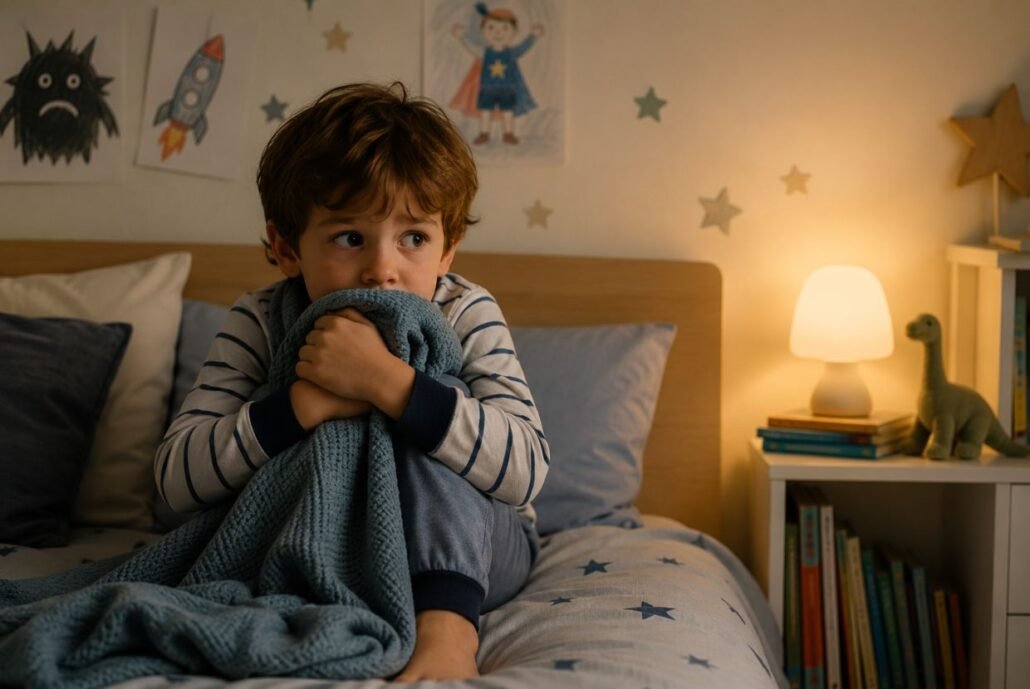
There comes a time that almost every family experiences. Suddenly, the child who used to fall asleep peacefully starts asking for the bedroom door to be left slightly open, says there’s a monster under the bed, or cries when a stranger tries to pick them up. That’s when the question arises: Is this normal, or should I be worried?
In most cases, the answer is reassuring. Fear is a natural part of childhood development and evolves just like language, motor skills, and social relationships do. Not all children experience the same fears, nor do they appear at exactly the same age, but there are certain developmental stages when specific fears are especially common.
If you’re wondering at what age do children start developing fears, it’s important to know that fears can appear as early as the first year of life. As children grow, learn more about the world, and develop their imagination, the things that frighten them also change. Understanding this process helps parents respond with patience and recognize when their child simply needs reassurance and when it may be appropriate to seek professional advice.
It’s also worth remembering that every child experiences this stage differently. Some show very few worries, while others need more time to feel safe in certain situations. Their temperament, personal experiences, and even changes in routine can influence how they express their emotions. That’s why, when parents ask at what age do children start developing fears, they’re not just looking for a specific age—they want to know whether what their child is experiencing is a normal part of growing up. Understanding how fear develops throughout childhood makes it easier to support children calmly and helps avoid common mistakes, such as dismissing their fears or trying to eliminate them too quickly.
At What Age Do Children Start Developing Fears?
Children’s first fears typically appear between 6 and 8 months of age. By this stage, babies can clearly recognize the people closest to them and begin reacting differently to unfamiliar faces.
That’s why it’s perfectly normal for a baby to cry when someone they don’t know tries to hold them or to become upset when a parent leaves the room. Although this can be exhausting for families, separation anxiety is a normal part of development and often indicates that a secure emotional bond has been established.
As children grow, these early fears gradually fade and are replaced by new ones. Their imagination, life experiences, and growing understanding of the world all influence what they worry about at different ages.
How Childhood Fears Change as Children Grow
Every stage of childhood comes with its own challenges. Understanding what typically happens at each age makes it easier to interpret children’s reactions and respond calmly.
From 0 to 2 Years Old: Discovering the World Can Be Scary
During the first years of life, everything is new. Loud noises, unfamiliar people, or being separated from the people who make them feel safe can cause significant distress.
Common fears at this stage include:
- Strangers.
- Separation from parents or caregivers.
- Loud noises, such as a vacuum cleaner or hairdryer.
- Large objects or things that move unexpectedly.
At this age, children don’t need lengthy explanations. What reassures them most is physical closeness, predictable routines, and knowing that a trusted adult is always there to protect them.
Even though they’re still too young to follow complex stories, sharing reading time strengthens your bond. Animal books for children are a wonderful way to introduce emotions while creating a calm bedtime routine.
Between 2 and 3 Years Old: When Imagination Takes Off
Around the age of two, something remarkable happens: children’s imagination begins to flourish. They invent stories, turn cardboard boxes into pirate ships, and talk to imaginary characters. However, this creativity also makes it harder for them to distinguish between what’s real and what’s imaginary.
As a result, new fears often emerge, including:
- The dark.
- Monsters.
- Certain animals.
- Costumes.
- Sleeping alone.
- Unexpected noises.
Many parents instinctively respond by saying, “There’s nothing to be afraid of,” or “Monsters aren’t real.” However, to a young child, the fear feels completely real. Instead of trying to convince them otherwise, it’s usually more helpful to listen carefully and acknowledge their feelings.
Books can also become valuable allies. Reading together with books for 3-year-olds, where the characters overcome everyday worries, helps children recognize their emotions and understand that feeling scared is a perfectly normal part of growing up.
If bedtime becomes the most challenging part of the day, you may also find our article on How to Help Children Overcome Their Fear of the Dark Without Pressure useful, where you’ll discover gentle, respectful strategies for supporting your child.
From 4 to 5 Years Old: Monsters Feel Very Real
Between the ages of four and five, children’s imagination reaches one of its most intense stages. This is when every shadow can become a monster, and an unfamiliar noise may convince them that someone is hiding in the house.
Although these fears may seem irrational to adults, they feel completely real to children.
In these situations, asking questions is often far more effective than offering quick reassurance. Asking what they think is there, what worries them, or what might help them feel better allows children to express their emotions and feel supported.
Reading continues to be a valuable tool. There are many books for 4-year-olds that explore emotions in a gentle, age-appropriate way, helping children understand that everyone feels scared sometimes and that fears can gradually be overcome.
From 6 to 8 Years Old: More Realistic Worries Begin to Appear
Starting primary school brings many changes. Children gain a better understanding of how the world works, and many imaginary fears begin to fade.
Instead, new concerns often arise, such as:
- Failing a test.
- Speaking in front of the class.
- Struggling to make friends.
- Something happening to their parents.
- Storms and other natural events.
At What Age Do Children Start Developing School-Related Fears?
These concerns commonly appear between the ages of 6 and 8, when children become more aware of other people’s opinions and the responsibilities that come with school.
At this stage, it’s especially important to build their self-esteem and remind them that making mistakes is a natural part of learning. When children feel they can talk openly about their worries without being judged, they are much better equipped to face everyday challenges.
Reading can also help develop confidence and empathy. If your child is already reading independently or just beginning to do so, you’ll find age-appropriate stories in our collections of books for 6-year-olds and books for 7- to 8-year-olds.
From 9 Years Old Onwards: Fears Change, but Children Still Need Support
As children grow older, monsters become less frightening, but new fears emerge that are much more grounded in reality.
They may begin worrying about:
- School grades.
- Their group of friends.
- Fitting in.
- Illness.
- Family problems.
- News they see online or on television.
At this age, fear is often no longer expressed through tears. Instead, children may become more irritable, have trouble sleeping, or avoid certain situations.
It’s still important to make time for calm conversations and family activities. Reading together or discussing a story can naturally open up conversations that might not happen otherwise.
If you’re looking for age-appropriate reading, explore our collection of books for children aged 10 to 12, featuring stories that connect with the interests and challenges of this stage of childhood.
How to Help a Child When They’re Afraid
Although we can’t prevent our children from feeling fear, we can teach them how to face it in a healthy way.
Listen Before Trying to Reassure Them
When a child says they’re scared, they’re usually not looking for a logical explanation. What they need most is to feel that an adult understands how they feel.
Phrases such as “I’m here with you,” “I understand why that feels scary,” or “Let’s figure it out together” are often far more comforting than simply saying, “There’s nothing to be afraid of.”
Stay Calm
Children constantly observe the adults around them. When we respond calmly, we help them feel that the situation is under control and that they are safe.
Take Small Steps
Forcing children to face their fears all at once rarely works. It’s much more effective to support them gradually, respecting their pace and celebrating every small achievement along the way.
Avoid Using Fear as a Way to Discipline
Threats such as “The bogeyman will come if you don’t behave” or “Someone will take you away if you don’t listen” may seem harmless, but they create insecurity and make it harder for children to develop healthy emotional coping skills.
Books Can Help Children Talk About Their Feelings
Sometimes it’s easier for children to talk about a story’s character than about themselves.
When they see a character who is also afraid but eventually overcomes that fear with support, they realize they are not alone. Reading together also creates a calm, relaxed environment where meaningful conversations often happen naturally.
When Should You Seek Professional Help?
Most childhood fears gradually disappear as children become more confident and gain new experiences. However, it may be a good idea to consult a healthcare professional if the fear:
- Lasts for several months without improving.
- Prevents your child from sleeping or attending school.
- Causes them to avoid normal daily activities.
- Leads to significant distress or anxiety.
- Has a major impact on family life.
In these situations, seeking help early can make a real difference by identifying the underlying cause and providing both children and parents with the right support and strategies.
Growing up also means learning to face the things that scare us, little by little. As parents and caregivers, our role isn’t to eliminate fear but to guide children through it, helping them discover that, with patience, support, and confidence, they are far braver than they realize.
Every child develops at their own pace, and not all children overcome fears at the same time. Some may gain confidence within a few weeks, while others need more time and reassurance. What matters most is providing a safe environment where they feel comfortable expressing their emotions without fear of being judged.
So, if you ever find yourself wondering at what age do children start developing fears, remember that there is no exact age when fears disappear. The important thing is that, with the support of caring adults, children gradually learn to understand their fears, face them, and discover that they are capable of overcoming what worries them today.
Sources
- American Academy of Pediatrics. (2023). Fears and Phobias in Children: How Parents Can Help. HealthyChildren.org.
- American Academy of Pediatrics. (2022). Helping Your Child Manage Anxiety: Tips for Home and School. HealthyChildren.org.
- American Academy of Pediatrics. (2022). Separation Anxiety and Sleep Problems in Young Children. HealthyChildren.org.
- UNICEF Uruguay. (2024). Fears in Early Childhood: What to Do When They Appear.