
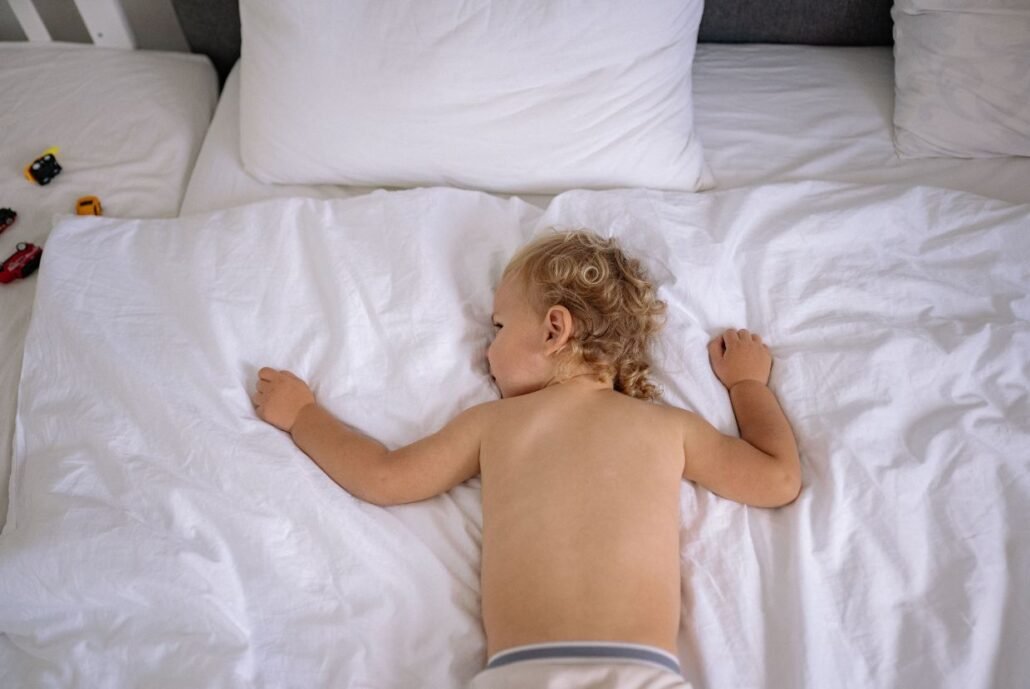
If you have a 2-year-old at home, you’ve probably wondered at some point whether they’re going to bed too late, too early, or simply at the right time for their age. And you’re certainly not alone. In fact, one of the most common questions among parents is exactly what time a 2-year-old should go to bed.
At this age, many children have already moved beyond some baby routines, but they still need a significant amount of sleep to grow, learn, and regulate their emotions. The challenge is that it’s not always easy to know what schedule is most appropriate, especially when every child seems to have their own rhythm.
While there isn’t one exact bedtime that works for every child, there are recommendations supported by pediatricians and sleep specialists that can serve as a useful starting point. Rather than focusing only on the clock, it’s important to look at how much total sleep your child gets and how they function throughout the day.
How Many Hours Should a 2-Year-Old Sleep?
Before talking about specific bedtimes, it’s important to understand how much sleep a child this age needs.
Leading pediatric organizations recommend that children between 1 and 2 years old get between 11 and 14 hours of sleep per day, including both nighttime sleep and naps.
In practice, most 2-year-olds typically sleep:
- Between 10 and 12 hours at night.
- Between 1 and 2 hours during a daytime nap.
When children get enough rest, they usually wake up in a good mood, maintain steady energy levels throughout the day, and cope better with learning, playtime, and social interactions.
Of course, every child is different. Some need to be closer to the upper end of the recommended range, while others function perfectly well with slightly less sleep.
So, What Time Should a 2-Year-Old Go to Bed?
If we consider the recommended amount of sleep and typical wake-up times, most specialists suggest a bedtime between 8:00 p.m. and 9:00 p.m.
For this reason, when parents ask what time a 2-year-old should go to bed, a reasonable guideline is usually somewhere between eight and nine o’clock in the evening.
Many studies on children’s sleep have found that toddlers of this age often fall asleep around 8:15 p.m. or 8:30 p.m., although this naturally varies from family to family.
For example, a child who regularly wakes up at 6:30 a.m. will likely need an earlier bedtime than one who usually wakes up at 8:00 a.m. The ideal schedule will always depend on the total amount of sleep accumulated over a 24-hour period.
Why an Early Bedtime Is Usually Recommended
Sometimes it may seem as though a child still has plenty of energy at 9:00 p.m. They run, play, talk, and appear anything but tired. However, this doesn’t necessarily mean they don’t need sleep.
During childhood, the body follows natural biological rhythms very closely. As evening approaches, the body begins producing melatonin, the hormone that helps prepare us for sleep.
For many young children, this process begins around 7:00 or 7:30 p.m. When bedtime is delayed too much, children can experience what sleep specialists call “overtiredness.” Interestingly, the more overtired a child becomes, the harder it can be for them to relax and fall asleep.
For this reason, many pediatricians believe that putting children to bed too late often creates more challenges than benefits.
Some of the most common consequences of insufficient sleep include:
- Increased irritability.
- More tantrums at the end of the day.
- Difficulty concentrating.
- Lower tolerance for frustration.
- Persistent tiredness.
- Disruptions to eating and sleeping routines.
Signs That Your Child May Need an Earlier Bedtime
Sometimes the answer to what time a 2-year-old should go to bed is right in front of us, hidden in the signs they show every day.
It may be worth reviewing their schedule if your child:
- Falls asleep easily in the car late in the afternoon.
- Has more tantrums than usual before dinner.
- Becomes very irritable at the end of the day.
- Seems tired even after a nap.
- Has difficulty waking up in the morning.
Many parents see these situations as a temporary phase or simply a bad day. And sometimes they are. But when they occur consistently over several weeks, they may indicate that your child’s sleep schedule needs some adjustment.
In these cases, moving bedtime 15 to 30 minutes earlier for several days is often a simple strategy that can help determine whether your child rests better.
The Importance of Maintaining a Consistent Routine
Just as important as deciding what time a 2-year-old should go to bed is keeping that schedule relatively consistent.
Young children tend to adapt better when they know what to expect. Routines provide security and help the brain anticipate that it’s time to wind down and rest.
This doesn’t mean living by the clock or avoiding every exception. A family celebration, a holiday, or a special occasion is unlikely to significantly affect their sleep habits.
What matters is maintaining a certain degree of regularity most of the time.
When schedules constantly change, it becomes more difficult for the body to recognize when it’s time to sleep and when it’s time to be active.
What About Naps?
Most 2-year-olds still need a daily nap.
This usually takes place after lunch and typically lasts between one and two hours. Naps help meet the sleep needs typical of this age and also support better emotional regulation throughout the afternoon.
However, there are two situations that can affect nighttime sleep:
- Excessively long naps.
- Naps that happen too late in the day.
When a child sleeps until late afternoon, they may feel less tired at bedtime and take longer to fall asleep.
For this reason, if you’re wondering what time a 2-year-old should go to bed, it’s also important to consider how much sleep they’re getting during the day.
Naps Matter More Than You Might Think
Not all children reach bedtime with the same sleep needs.
For example, a child who sleeps a full two-hour nap after lunch will likely need less nighttime sleep than another child who only naps for forty-five minutes.
That’s why, instead of focusing obsessively on an exact bedtime, it’s often more helpful to look at the bigger picture. The best indicator will always be the total number of hours slept throughout the day.
How to Create a Bedtime Routine That Works
Routines help the brain recognize that it’s time to rest.
Ideally, the bedtime routine should begin around 30 to 45 minutes before the desired bedtime.
A simple sequence might look like this:
- A calm dinner.
- A relaxing bath.
- Pajamas.
- Brushing teeth.
- Reading a bedtime story.
- Dim lights and sleep.
The routine doesn’t need to be perfect, nor does it have to last exactly the same amount of time every night. The important thing is that it feels predictable.
Reading, in particular, often becomes one of the most cherished moments of the day for many families. Sharing a story before bed helps reduce activity levels, strengthens the emotional bond between parent and child, and creates a smoother transition into sleep.
At this time of day, many parents look for stories that convey calmness and security. A book like Luna can become a beautiful bedtime ritual thanks to its emotional approach and soothing atmosphere that accompanies little ones before they fall asleep.

Discover: Luna
An ideal story to accompany your bedtime routine. A gentle and poetic tale that helps create a special moment between parents and children at the end of the day.
Small Habits That Can Make Sleep More Difficult
Sometimes the issue isn’t the bedtime itself, but rather certain habits that interfere with sleep.
Some of the most common include:
- Using screens before bedtime.
- Playing highly stimulating games during the last hour of the day.
- Frequently changing schedules.
- Putting a child to bed when they’re already overtired.
- Having dinner too late.
Small adjustments to these routines often lead to noticeable improvements within a few weeks.
Every Child Has Their Own Rhythm
If you’re looking for a definitive answer to what time a 2-year-old should go to bed, you’ll probably discover that there isn’t a single solution that works for everyone.
Some children show clear signs of sleepiness by 8:00 p.m., while others need a little more time to wind down. The key is observing how they behave during the day.
If they wake up well-rested, maintain age-appropriate energy levels, and generally have a stable mood, there’s a good chance they’re getting the sleep they need.
For this reason, rather than focusing on a specific bedtime, it’s better to concentrate on three essential factors: ensuring your child gets enough total sleep, establishing a calm bedtime routine, and maintaining relatively consistent schedules.
Current scientific evidence points in exactly this direction. Sufficient sleep, combined with consistent habits adapted to each family’s needs, remains one of the best ways to support healthy development during the early years of childhood.
Sources Consulted
American Academy of Sleep Medicine (AASM) – Recommended Amount of Sleep for Pediatric Populations
Asociación Española de Pediatría – Sueño entre los 2 y los 5 años
HealthyChildren.org (American Academy of Pediatrics) – Healthy Sleep Habits
MedlinePlus – Hábitos a la hora de acostarse para bebés y niños
LeBourgeois et al. (2013) – Circadian Phase and Its Relationship to Nighttime Sleep in Toddlers
This article has been prepared using recommendations from the Spanish Association of Pediatrics, the American Academy of Pediatrics, the American Academy of Sleep Medicine, and scientific studies on children’s sleep and circadian rhythms.