
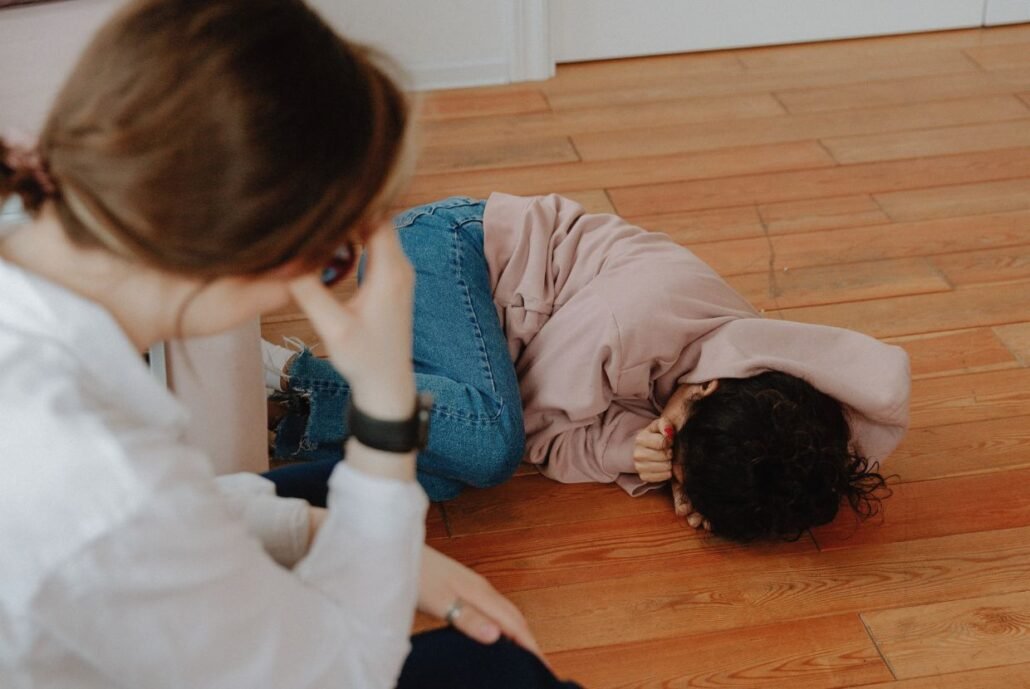
When we think of a tantrum, we probably picture a young child crying, shouting or getting angry because they do not get what they want. But what happens when they are 7, 9 or 11 years old and still react this way?
Tantrums in children aged 6 to 12 can surprise parents. At this age, children can already talk about how they feel, understand rules and, in many situations, control their impulses. That is why it is easy to think: “They are too old to behave like this.”
However, emotional development does not happen overnight. Learning to manage frustration, control an impulsive reaction and calm down after becoming angry are skills that continue to develop throughout childhood.
So, rather than simply asking why a child is still having tantrums, it is worth looking at what triggers them, what they look like and what happens afterwards.
Why do tantrums in children aged 6 to 12 happen?
Tantrums tend to be much more common during the early years of childhood and usually decrease as children develop better tools for regulating their emotions.
But decreasing does not mean disappearing completely.
At this age, children are still learning how to manage intense emotions. They may know perfectly well that they should not shout and still struggle to control themselves when they are very angry. They may also understand afterwards that their reaction was not appropriate and, nevertheless, not know how to prevent it from happening again.
Irritability and difficulties with emotional regulation can be related to different factors, such as cognitive control, the ability to manage anger or tolerance for frustrating situations.
This helps us understand something important: an occasional tantrum does not necessarily mean that there is a problem.
What really deserves attention is the pattern that develops over time.
Tantrums in children aged 6 to 12 and emotional regulation
There is an idea that can be difficult to remember when you are in the middle of an argument with a child: knowing what they should do does not necessarily mean they are able to do it in that moment.
A child may know that they should not shout and still shout. They may understand that they have to wait and lose their patience. They may even recognise afterwards that they reacted badly and still not know how to respond differently the next time.
The ability to regulate emotions continues to develop throughout childhood. So, an intense reaction does not always reflect a lack of education, boundaries or willingness.
Sometimes, the child simply still needs to learn how to manage what they are feeling.
What can trigger a tantrum at this age?
The reasons also change as children grow.
A six-year-old may become angry because they have to stop playing and go to bed. At ten, they might slam a door because they have had an argument with their best friend or because they feel that everyone expects too much from them.
The situations are different, but there is something they have in common: something has triggered an emotion that the child does not yet know how to manage well.
Some common triggers include:
- Not getting what they expected.
- Losing a game or competition.
- Struggling with homework.
- Feeling compared with other children.
- Receiving criticism.
- Having an argument with a friend or classmate.
- Feeling that a rule is unfair.
- Having to do something they do not want to do.
- Feeling tired or overwhelmed.
- Having a worry they do not know how to explain.
At this stage, social relationships also begin to play an increasingly important role. Wanting to be liked, feeling accepted, fitting in with a group or worrying about their own abilities can create emotions that are not always easy to express.
That is why it is not always easy to identify what lies behind an apparently disproportionate reaction.
Not all tantrums in children aged 6 to 12 are the same
This is one of the keys to understanding this behaviour.
It is not the same for a child to have an occasional outburst after a difficult day as it is for them to be angry almost every day and react disproportionately to every small setback.
Irritability can show up as a more persistent tendency to become angry, frustrated or react negatively when things do not go as the child expected.
That is why an isolated tantrum tells us very little. What matters is the bigger picture: when it happens, how long it lasts, how often it occurs and how it affects the child.
When should you be concerned about tantrums in children aged 6 to 12?
There is no specific age at which a tantrum automatically goes from being expected to being concerning.
Other aspects need to be considered.
It may be worth seeking professional guidance if outbursts are very frequent, particularly intense or difficult to control, if they last for a long time, or if they occur in response to situations that would normally cause relatively little frustration.
It is also worth paying attention when:
- There is frequent aggression towards other people.
- The child hurts themselves during an outburst.
- Tantrums occur both at home and at school.
- They interfere with friendships or family relationships.
- The child remains irritable even when they are not having a tantrum.
- They clearly affect school performance or everyday activities.
This does not necessarily mean that there is a disorder. Irritability can appear in very different contexts and needs to be considered alongside the child’s overall functioning and any other difficulties.
The important thing is not to focus only on the behaviour we can see.
What can parents do when a tantrum happens?
The first thing to remember is that the moment of greatest anger is probably not the best time to try to reason with a child.
When a child is completely overwhelmed, explaining for ten minutes why their behaviour is inappropriate is unlikely to achieve much.
First, they need to calm down. Then comes the time to talk.
It can be helpful to look at what happens at three different points.
Before: What was happening just before the outburst? Were they hungry? Tired? Had they just come home from school? Had they argued with someone?
During: What do they need to calm down? At this point, adults need to maintain boundaries and, above all, make sure that nobody gets hurt.
After: Once the child is calm, you can talk about what happened. Not just to point out what they did wrong, but also to try to understand what they were feeling and what they could do differently next time.
The aim is not to make sure the child never gets angry again. Getting angry is normal. What they need to learn is what to do with that anger.
Listening to what lies behind the anger
Sometimes, the tantrum is simply the part we can see.
Behind it there may be frustration, tiredness, fear, embarrassment, insecurity or simply a day that has been too much.
Imagine a child who comes home and has an outburst because they have been asked to do their homework. It may look as though the homework is the problem. But perhaps they have spent the whole afternoon worrying because they had a disagreement with a classmate.
This does not mean that they should be allowed to shout or be disrespectful. Understanding the reason does not mean justifying every behaviour.
A child can need clear boundaries while also needing help to understand what is happening to them.
In fact, learning to identify emotions and finding appropriate ways to express them is part of developing emotional self-regulation.
Do tantrums disappear as children get older?
Tantrums typical of early childhood usually decrease with age. But children do not stop getting angry, frustrated or disappointed simply because they grow older.
What changes is the way they express it.
A young child may throw themselves on the floor. A nine-year-old may shout and go to their room. An eleven-year-old may shut themselves away, answer back or give up on an activity when something does not go the way they expected.
This is also a stage when it can be helpful to use resources that encourage children to talk about emotions without turning every conversation into a lesson.
Books can be a great starting point. A story can open up conversations about frustration, friendship, fear, insecurity or conflict through what happens to other characters.
For this age group, there are specific options within categories such as books for 11-year-olds and books for children aged 10 to 12, which can help you find stories suited to their age and interests.
What can we do when tantrums continue to happen?
Tantrums in children aged 6 to 12 can be confusing, especially when parents feel that their child should already know how to control themselves.
But emotional development does not always progress at the same pace. A child may be very independent in some areas and still need quite a lot of support when it comes to managing frustration or anger.
That is why, when an outburst happens, it is worth looking beyond the behaviour itself.
Does it happen occasionally or is it becoming a regular occurrence? What situations tend to trigger it? Can the child calm down afterwards? How do they feel the rest of the time? Is it affecting school, friendships or family life?
These questions tell us much more than simply counting how many tantrums a child has had.
Above all, they allow us to change the way we look at the situation: it is not simply about making the child stop having tantrums, but about helping them develop the tools they need to manage what they are feeling.
Sources consulted
Systematic Review and Meta-Analysis: Early Irritability as a Transdiagnostic Neurodevelopmental Vulnerability to Later Mental Health Problems.
World Health Organization (WHO). Adolescent mental health.
World Health Organization & UNICEF. Early Adolescent Skills for Emotions (EASE). Evidence-based programme for adolescents aged 10 to 15.